
What Does a Technical Program Manager Actually Do?
How TPMs turn complex ideas into real outcomes

Chances are you’ve heard very different explanations of the Technical Program Manager (TPM) role, or experienced it differently yourself across organizations, teams, or even within the same company.
The reality is that the TPM role is hard to explain because it doesn’t fit neatly into a single box. How a TPM operates, and what they focus on day to day, often shifts depending on the needs of the organization or team, or even the needs of the program itself. Being able to adapt to these varying needs is not only expected of TPMs, but necessary to be successful in the role.
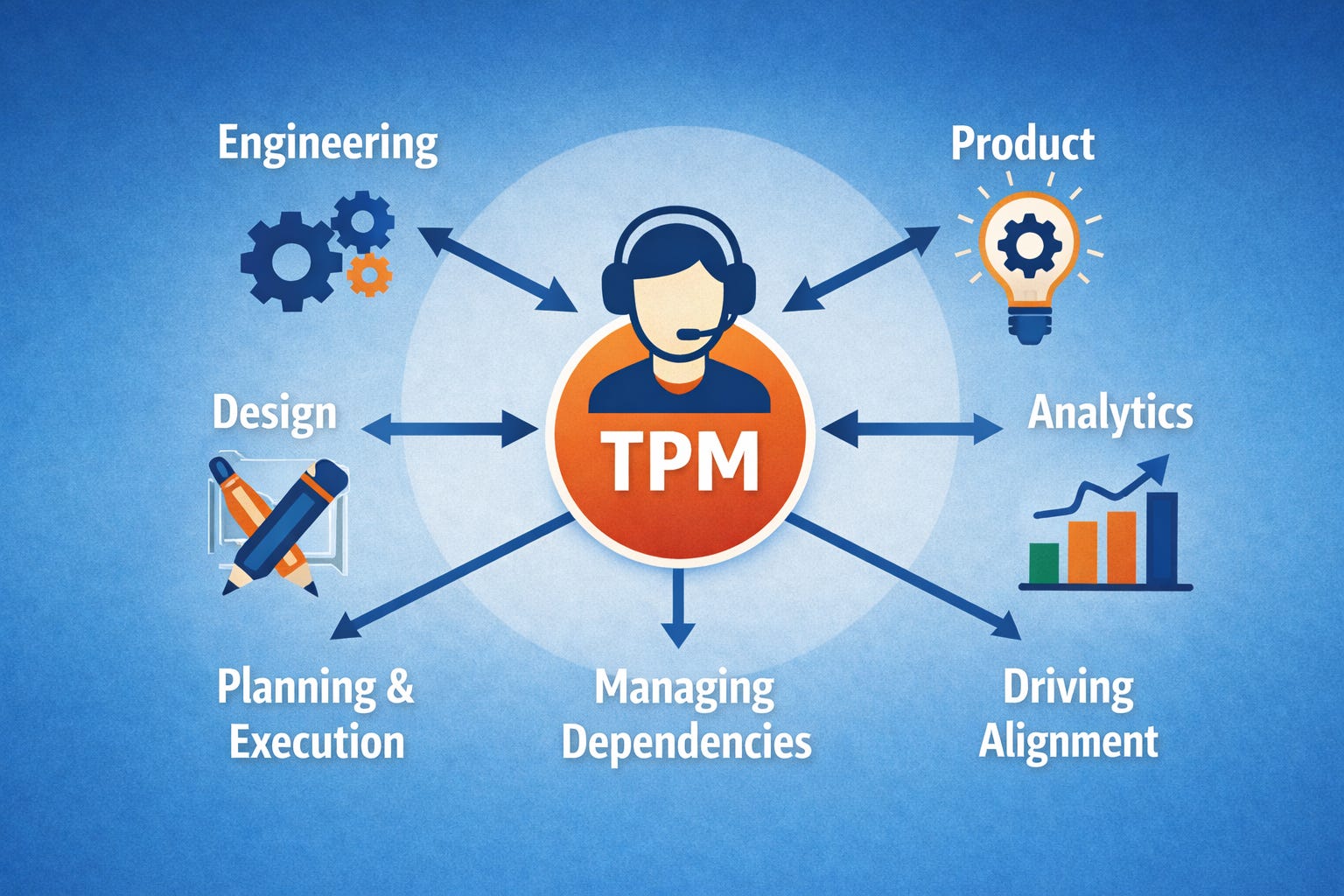
At its core, a Technical Program Manager is responsible for delivering complex, cross-functional initiatives. They own planning and end-to-end execution for these initiatives and are especially critical when work spans multiple teams and systems, and requires managing tight timelines and dependencies. TPMs typically operate at the intersection of engineering, product, design, analytics, quality assurance, legal and compliance, marketing, customer experience teams and leadership.
One way to think about the TPM role is as the center of a wheel. Engineering, product, design, analytics, quality assurance, legal and compliance, marketing, customer experience teams and leadership are all spokes connected to that center. Each spoke plays a critical role, but if one slows down or loses alignment, the entire wheel starts to wobble. A TPM’s job is to ensure the wheel keeps moving by keeping the spokes aligned, anticipating and addressing risks early and ensuring the team continues making progress toward delivering a high-quality initiative in a timely manner.
Unlike Product Managers, TPMs don’t typically own the product vision or customer roadmap. And unlike Engineering Managers, they don’t own people management or code quality. Instead, TPMs focus on figuring out how to make the product vision a reality. They identify the stakeholder teams needed to deliver an initiative and define the key deliverables for each team. They establish clear ownership through a RACI matrix, lead planning exercises, define delivery timelines and milestones, track progress and manage dependencies and keep program stakeholders and leadership informed on progress.
TPMs need to operate at multiple levels at once. They look at programs from a 10,000-foot view, understanding overall progress, timelines, and outcomes, while also diving into the 1,000-foot view when needed, where day-to-day execution and details live. Being effective in the role requires knowing when to zoom out and when to get into the weeds.This dual perspective allows TPMs to spot risks early, understand how decisions made within individual teams can impact the broader program and intervene before small issues ripple into larger delays. It also helps ensure that execution across teams stays aligned with the overall goals and delivery timelines.
To spot dependencies and potential delays early, TPMs need to understand both the product vision and the engineering solutions used to bring that vision to life. This is especially important in complex, cross-functional programs where different engineering teams own different parts of the overall delivery. Understanding how these components fit together, how systems interact and where handoffs occur allows TPMs to connect the dots and see the bigger picture. This perspective is critical for anticipating risks, identifying deviations from the original intent, and intervening early before issues impact the overall program.
Another critical aspect of the role is decision facilitation. TPMs help create the conditions for good decisions by bringing the right people together, making constraints explicit and ensuring trade-offs are understood. As priorities evolve and plans change, TPMs help teams adapt while keeping the program moving forward.
The impact of a TPM isn’t always visible in a single feature or launch. It shows up in smoother execution, fewer surprises, clearer communication and teams that can move faster because someone is thinking holistically about the program. Ultimately, Technical Program Management is about creating clarity in the middle of complexity. It’s about helping teams move forward when the path isn’t obvious, aligning people and systems and helping ambitious ideas move from intent to reality. The role may look different from one program to the next, but its purpose remains the same: enabling teams to turn complex ideas into meaningful outcomes, together.